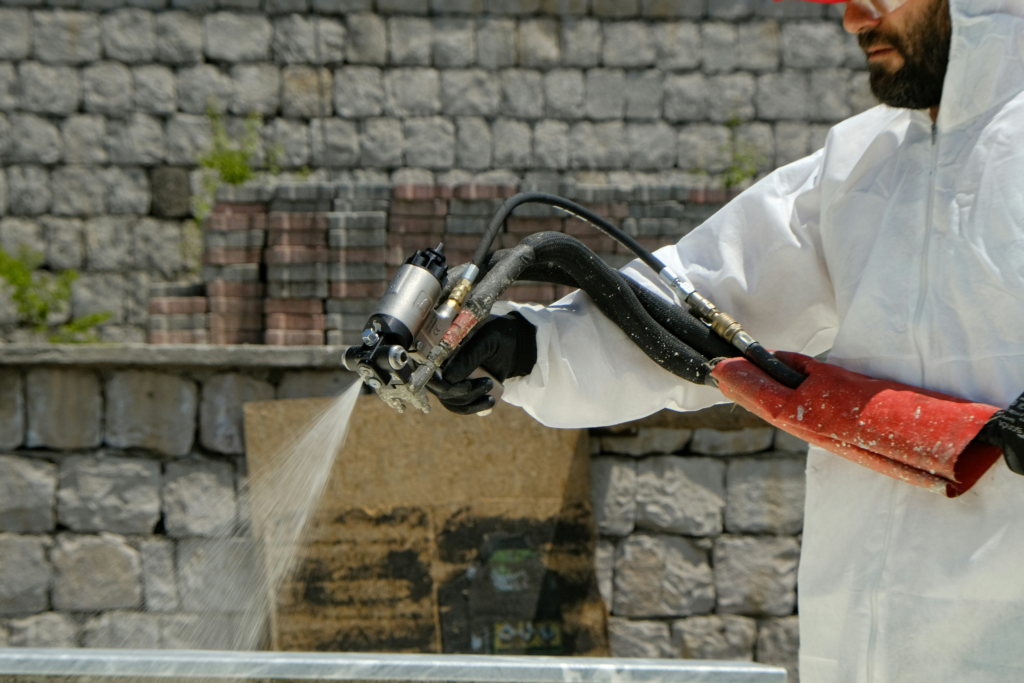
Choosing the right insulation for a home or commercial property is one of those decisions that tends to feel overwhelming at first. There are a lot of products out there, and the differences between them aren’t always obvious until you’re already living with the consequences of a bad choice.
Foam insulation, however, has become a standout option for property owners across the country, and for the following good reasons.
1. Superior Energy Efficiency
One of the most immediate and measurable benefits of foam insulation is what it does for energy efficiency. Traditional insulation materials like fiberglass batts do a decent job of slowing heat transfer, but they don’t seal air leaks.
Foam insulation, particularly closed-cell spray foam, acts as both an insulator and an air barrier simultaneously. That means heated or cooled air stays where it’s supposed to be, and conditioned air isn’t quietly sneaking out through gaps and cracks.
The difference this makes on monthly energy bills can be significant. HVAC systems don’t have to work as hard to maintain comfortable temperatures, which translates directly into lower energy costs month after month.
For homeowners who’ve been watching their utility bills creep up every season, foam insulation often becomes one of the most cost-effective upgrades they can make.
2. Effective Air Sealing
Beyond the energy savings, foam insulation dramatically improves the comfort of a space. Anyone who has lived in a home with inconsistent temperatures from room to room knows how frustrating it can be. Hot and cold spots are almost always a sign of air leaks somewhere in the building envelope, and foam insulation addresses this at the source.
Open-cell and closed-cell spray foam both expand to fill gaps, cracks, and irregular surfaces that other insulation materials simply can’t reach. This makes foam particularly effective in attic insulation applications, crawl spaces, and other areas where air infiltration tends to be highest.
The result is a more consistent and comfortable indoor environment throughout the entire property, whether it’s a single-family home or a larger commercial building.
3. Long-Term Performance with Minimal Maintenance
Another advantage that often goes underappreciated is how durable foam insulation is compared to other options. Fiberglass batts can settle, sag, and lose their effectiveness over time. Blown-in insulation can shift if moisture gets involved. Foam insulation, on the other hand, maintains its shape and performance for decades once it’s properly installed.
Providers like Cincinnati Retrofoam specialize in retrofit projects for existing homes, which means homeowners don’t have to wait for a full renovation to start enjoying these benefits.
The foam is injected into wall cavities without requiring major demolition, making it a practical solution for older homes that were built before modern energy codes became standard.
That kind of durability also means property owners aren’t repeatedly paying for re-insulation services years down the road. It’s a one-time insulation project that continues to deliver value well into the future.
4. Better Indoor Air Quality
Most people think about insulation purely in terms of temperature control, but its impact on indoor air quality is just as important. When a home or building has air leaks, those gaps don’t just let conditioned air out. They also let allergens, dust, humidity, and outdoor pollutants in.
In climates with high humidity, uncontrolled moisture infiltration can even lead to mold growth over time, which creates a much bigger problem than a high energy bill. Foam insulation’s air sealing properties significantly reduce the pathways through which these contaminants enter a living or working space.
For families with allergies or respiratory sensitivities, this benefit alone can make a meaningful difference in daily quality of life. It also helps control moisture levels inside the structure, reducing the conditions that lead to mold and mildew without requiring additional products or systems.
5. Added Structural Integrity
Closed-cell spray foam does something that no other insulation material can claim: it adds rigidity to the surfaces it’s applied to. Because it cures into a hard, dense material, closed-cell foam can strengthen wall assemblies, rooflines, and even crawl space structures.
This is particularly valuable in new construction projects where builders want to maximize the structural integrity of the building from the ground up. It also serves as an effective vapor barrier, which is critical in areas where moisture management is a concern.
For properties with crawl spaces or basements, this dual function, both insulating and protecting against moisture, makes closed-cell foam a particularly smart investment. The thermal barrier it creates helps maintain a stable thermal envelope throughout the structure, reducing heat loss and keeping energy waste to a minimum.
6. Noise Reduction
Soundproofing isn’t always the first thing people think of when they’re evaluating insulation options, but it’s a benefit worth paying attention to, especially in urban areas or homes near busy roads.
Open-cell spray foam has excellent sound-dampening properties because of its softer, more porous structure. It absorbs sound waves rather than reflecting them, making it effective at reducing noise transmission between rooms or from the outside.
For commercial buildings where office noise or privacy is a concern, or for homeowners who simply want a quieter living environment, this is a practical and often overlooked reason to choose foam insulation over alternatives. It’s one of those benefits that tends to surprise people in the best possible way once the insulation installation is complete.
7. Versatility Across Different Property Types
One of the things that makes foam insulation stand out from a practical standpoint is how many different applications it works well in. It’s equally at home in residential spray foam insulation projects and large-scale commercial buildings.
It can be applied in new construction projects before drywall goes up, or injected into existing walls during retrofit projects without requiring the walls to be torn apart. It works in attic insulation, crawl space insulation, bonus rooms, and even pole barns.
That kind of versatility means a single product and a single insulation contractor can handle the thermal needs of an entire property, rather than piecing together different materials for different sections.
The Bottom Line
Foam insulation is one of those investments that pays off in ways that go well beyond the initial insulation project. Lower energy bills, better air quality, more consistent comfort, reduced noise, and improved structural performance are all part of the package.
For anyone currently building, renovating, or simply trying to get more out of an existing property, it’s a solution worth taking seriously.