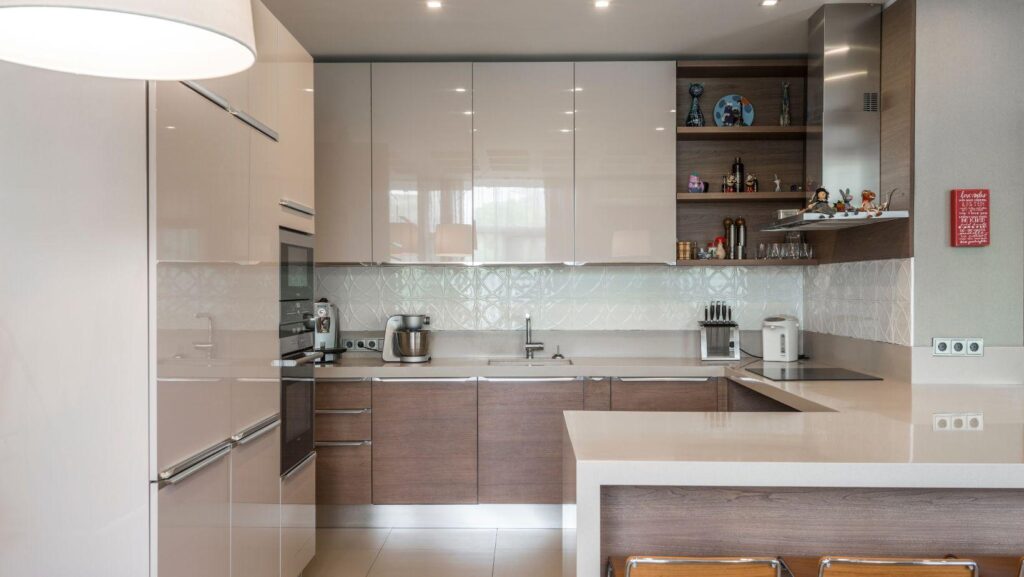
When people picture a kitchen update, they often think first about surfaces. Cabinets, countertops, hardware, and lighting fixtures usually get the early attention because they are easy to see and easy to imagine. Those choices matter, but they are not always what defines the room most.
The deeper character of a kitchen often comes from two quieter decisions: how the space is laid out and how it opens to the rooms or outdoor areas around it. These choices shape how the kitchen feels to move through, how light enters the space, and how connected the room seems to the rest of the home.
That is why a kitchen can look attractive on paper and still feel awkward in daily life. If the layout creates friction or the openings make the room feel closed in, even strong finishes will not fully fix the experience of the space.
A better kitchen usually starts with a better framework.
Layout sets the rhythm of the room
The layout of a kitchen affects almost every part of daily use. It shapes how people cook, where they gather, how they move between work zones, and how naturally the room connects to the rest of the home.
When the sink, range, refrigerator, and prep areas are placed well, the room tends to feel easy and efficient. When those relationships are weak, the kitchen may feel crowded, tiring, or harder to share with other people.
This is not only about the classic work triangle. It is also about walkways, storage placement, seating, and the way people pass through the room on the way to other parts of the house. A kitchen can have enough square footage and still feel limited if the layout asks too much from the wrong areas.
That is one reason a well-planned custom kitchen remodel often begins with circulation and room use rather than decorative details. Once the layout is right, the rest of the design has a much stronger foundation to build on.
Door openings change more than access
Door openings are often treated as a practical feature, but they have a much bigger effect on a kitchen than many homeowners expect. They do not only control how a person enters or exits the room. They also shape light, views, and the sense of openness.
A narrow opening can make a kitchen feel more enclosed, even when the room itself is fairly generous. A poorly placed door can interrupt the best wall for cabinets, break up circulation, or force the layout into an awkward arrangement. In smaller homes, that effect becomes even more noticeable because every interruption carries more weight.
On the other hand, a well-considered opening can help the kitchen breathe. It can improve sightlines, strengthen the relationship between rooms, and make the space feel calmer and easier to understand.
Indoor-outdoor flow starts at the threshold
The connection between a kitchen and the exterior matters more now than it did in many older layouts. People want kitchens that support everyday meals, casual gatherings, and a smoother relationship with patios, gardens, or outdoor seating areas.
That shift has made the threshold itself far more important. If the kitchen backs onto a yard or terrace but opens through a tight, visually heavy door, the room may still feel cut off from the outside. Even if the yard is attractive, the connection can seem weak.
This is where wider glazed openings can make a real difference. Adding French doors can bring in more daylight, open up longer views, and create a more natural path between the kitchen and the space beyond it. In many homes, that one change improves both the atmosphere of the room and the way it functions during daily life.
The kitchen does not need to become fully open to the outdoors to benefit from that kind of change. It only needs a threshold that feels more generous and more intentional.
Light follows the openings
The way a kitchen receives daylight is closely tied to how its openings are designed. Windows matter, of course, but door openings can play a major role as well, especially when they face a garden, courtyard, or rear terrace.
A room with stronger daylight tends to feel more spacious, more comfortable, and more pleasant to work in. Light also helps materials look better. Wood feels warmer, stone has more depth, and colors read more naturally when the room is not fighting darkness.
That is why openings and layout should be considered together. There is little benefit in bringing in more daylight if a tall run of cabinetry blocks it, or if the seating zone is arranged in a way that ignores the best view. A good kitchen makes light part of the plan rather than treating it as a lucky result.
Open does not always mean better
Many homeowners assume that the answer is simply to open everything up, though that is not always the case. A kitchen still needs definition. It needs enough enclosure to support storage, appliance placement, and a sense of order.
The goal is not to remove every boundary. The goal is to create openings that improve movement and visual connection without making the room lose its function. In some homes, that may mean widening a doorway. In others, it may mean using glazed doors instead of a solid door, or reworking a single transition point rather than changing the entire plan.
This is where proportion matters. An opening should feel large enough to improve flow and light, but not so dominant that it weakens the structure of the room.
Good kitchens feel easy before they feel impressive
The most successful kitchens often share one quality that is hard to fake. They feel easy.
People know where to move. Light reaches the places where it is needed. The room feels connected to the rest of the home, yet still clear in purpose. Nothing seems forced, even if the design itself is quite refined.
That ease usually comes from good planning rather than flashy features. It is the result of careful choices about where the room opens, how people circulate, and how the practical parts of the kitchen support the social ones.
When those decisions are handled well, the room tends to feel better before anyone has even noticed the hardware or the backsplash.
Final thought
Door openings and layout do more than shape the mechanics of a kitchen. They shape the experience of being in it. They affect how the room receives light, how it connects to nearby spaces, and how naturally everyday life unfolds inside it.
That is why they deserve more attention than they often get at the start of a remodel. Decor can add warmth and personality, but it works best when the structure of the room already feels right.
A kitchen that opens well and flows well usually feels brighter, calmer, and more useful from the moment someone steps into it. In the end, that is what gives a kitchen its strongest sense of quality.